Postural Reset Method: Interview with Creator Iryna Arnautova
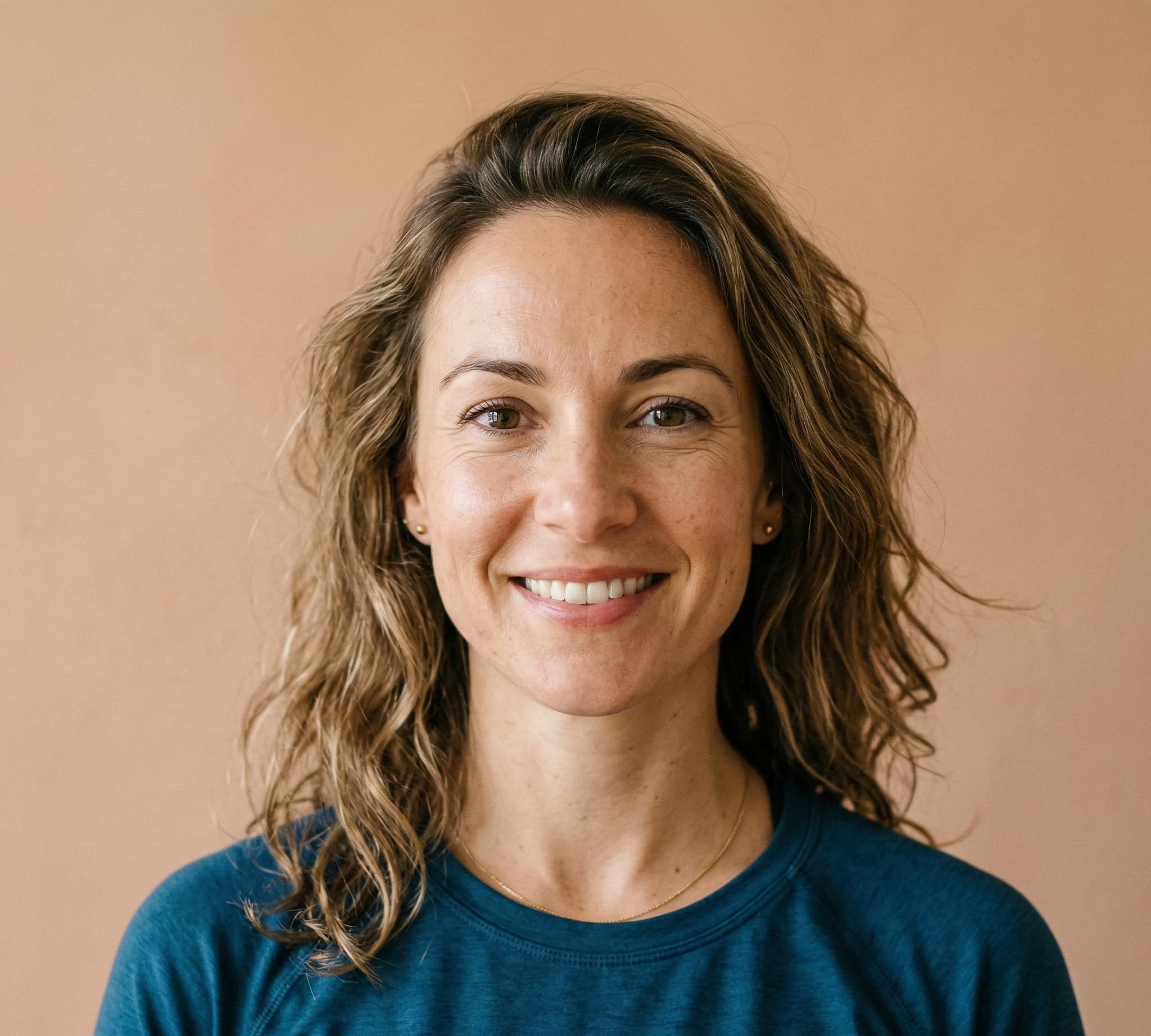

Experiencing tightness in the neck and shoulders, breathing that feels shallow, and an ongoing sensation of tension and holding patterns throughout the body—these are all too common in our everyday lives. Iryna Arnautova, a specialist in rehabilitation and neuro-somatic movement based in Sacramento,
Experiencing tightness in the neck and shoulders, breathing that feels shallow, and an ongoing sensation of tension and holding patterns throughout the body—these are all too common in our everyday lives. Iryna Arnautova, a specialist in rehabilitation and neuro-somatic movement based in Sacramento, has dedicated the past ten years to guiding individuals through these challenges. Her innovative Postural Reset Method™ integrates comprehensive 360° breathing techniques, subtle fascial micro-movements, and precise axial alignment strategies to alleviate protective muscle bracing and reinstate effortless, functional movement. We feel privileged to delve into a conversation with her, exploring the scientific foundations, nuanced elements, and motivating forces that underpin her groundbreaking work.
Which traditions, teachers, or scientific influences most profoundly shaped your approach?
My journey started within the lineage of Pattabhi Jois, where I trained under Vijay Amar, one of his dedicated students, during my time in India back in 2013. Vijay provided me with an incredibly solid groundwork. I essentially dragged myself into yoga as a final effort to manage my depression—a condition so severe that it prompted me to abandon everything and relocate to Asia. The consistent emphasis on asana practice slowly restored my equilibrium, sparking my desire to become a teacher. I aimed to solidify my personal advancements and uncover the reasons behind yoga's profound impact on emotional well-being. I obtained a Yoga Alliance certification, and concurrently, I was profoundly affected by a Vipassana retreat—a rigorous ten-day silent meditation in Lumbini, Nepal, the very birthplace of the Buddha.
Following that transformative experience, I journeyed extensively across Asia. Locals and fellow travelers repeatedly remarked on my improved physical vitality and emotional stability, often requesting to learn from me. I began offering yoga and breathwork sessions throughout the region, while also attending classes led by renowned instructors like Kino MacGregor and Dylan Werner.
I wasn't actively seeking employment; opportunities arose organically as people sought me out for workshops and classes. Eventually, Berjaya Corporation in Malaysia extended an offer to teach at their Redang Island Resort under Berjaya Hotels & Resorts and Berjaya Land. It felt like a pivotal shift in my path, yet while participants experienced positive changes during brief resort retreats, I yearned to foster enduring transformations. This led me to relocate to Indonesia.
It was in Indonesia that the most significant chapter of my development unfolded. Individuals actively pursued my guidance, providing spaces for sessions and forming dedicated groups. I came to recognize that my true mentors were the students themselves. Each arrived with unique requirements, and my existing knowledge of physiology and anatomy often fell short. To bolster my expertise, I enrolled in advanced university-level courses from prestigious Australian and American institutions, including those affiliated with Harvard. Clients increasingly presented with various pain issues, including pregnant women. Upon returning to Ukraine, I became pregnant myself and collaborated with a leading physician to develop a birth preparation program. I earned a certification in prenatal yoga and was subsequently invited to contribute in a gynecology department.
As my clientele expanded, the variety of needs intensified. I pursued advanced training with Ksenia Shatskaya, a highly regarded Russian expert in anatomy and physiology; finishing her full suite of programs firmly entrenched me in a rigorously evidence-based methodology, eliminating any reliance on intuition alone. I delved into scientific breathwork under Mikhail Baranov, trained alongside top yoga therapists such as Lidiya Gutorenko and Sergey Manindetchev within Sergey Agapkin's framework, and completed an extensive program at Organic People. This program synthesized diverse traditions through a scientific perspective, featuring instructors like Tatyana Illarionova and Maria Mitrofanova. There, I encountered Filipp Egorov, a behavioral neurophysiology expert—recognized by Forbes in 2019 as one of the standout educators—who unveiled the intricacies of brain signaling and neural structure formation. Additionally, I studied under Vyacheslav Dubynin, a Doctor of Biological Sciences and physiology professor.
I immersed myself in Bernstein’s theories, completed Thomas Myers’ Anatomy Trains course on two occasions, and thoroughly examined Gray’s Anatomy. These pursuits honed my critical thinking, reinforcing that no universal solution exists; instead, synergistic integration is key, given the individuality of people and cultural contexts. To enhance my interpersonal skills, I also trained in coaching with Mikhail Saidov, learning to better connect with individuals and tailor approaches effectively.
I maintain a habit of reviewing and dissecting the most current research from databases like Web of Science, PubMed, and beyond. Here in the United States, I have achieved NASM-CPT certification, with no intention of halting my education. My Postural Reset Method evolved gradually over the years, assembled incrementally. It wasn't born solely from academic study; rather, it crystallized through the fusion of theoretical knowledge, analytical rigor, and—above all—hands-on experience accumulated over 13 years with diverse clients.
In essence, it was the people and their specific needs that sculpted the method into what it is today.
In practice, what does the principle of “do less—do it more precisely” entail? How do you guide those convinced that advancement demands greater intensity, repetitions, or exertion?
I possess effective strategies to capture their attention right away. I employ tangible tools that illustrate, from the very first session, how precision—rather than sheer volume or velocity—delivers the most meaningful outcomes. Participants arrive burdened by postural imbalances and discomfort; my objective is to achieve an immediate breakthrough, providing tangible relief and a perceptible shift. Once they witness this progress firsthand, I follow up with straightforward explanations of the underlying principles.
Society has ingrained in us the notion that “more effort yields more results”—and that's an understandable mindset. However, true effectiveness lies in targeting precisely: identifying personal strengths and limitations, gaining intimate knowledge of one's physiology, embracing individual uniqueness, and proceeding accordingly. This is precisely the education I impart. Equipped with self-awareness, individuals can then pursue any pursuit—be it fitness routines, yoga flows, gym workouts, or running—with confidence. I don't discourage such activities; I empower them. Frequently, after mastering the Method, I transition clients into strength-focused regimens, celebrating their evolution and passion for new athletic endeavors.
My fundamental role is to foster harmony between individuals and their bodies, enabling informed training that builds rather than breaks. One of my mentors wisely noted: “You can develop a herniated disc from six years behind a desk—or just two years in the gym.” It's a humorous yet poignant truth. In my early yoga days, I suffered a significant knee injury due to unrecognized dysfunctions, a narrative echoed by countless others.
What exactly is “calm axial alignment,” and how does it transform the quality of movement?
Calm axial alignment refers to the body's effortless return to its inherent central axis, free from strain, rigidity, or rigid “military-style” posturing. The brain perpetually seeks to maintain the body in a configuration that minimizes energy consumption.
This optimal state enhances every bodily system, from respiratory efficiency and cardiovascular flow to joint mobility and profound core stabilization.
When clamps, hypertonicity, or persistent protective mechanisms dominate, this natural alignment falters. The body loses its efficient equilibrium and resorts to laborious, effort-driven motion.
It's not about forcibly “straightening up” or assuming a perfect stance. Rather, it involves retraining the nervous system to cease defensive posturing, allowing muscles to reorganize spontaneously in their ideal firing sequence. Consider the vast energy savings across all physiological systems—and the profound ease that could permeate daily life—simply by prioritizing this alignment.
From your perspective, what are the most prevalent oversights in the anatomy knowledge of typical yoga practitioners?
Yoga remains an extraordinary discipline; I've engaged with numerous schools and hold deep reverence for its traditions.
Analyzed through the lenses of neurophysiology and biomechanics, a primary shortfall emerges: yoga excels in form, elongation, and power-building, yet mobilization is strikingly underrepresented.
Mobilization encompasses subtle, multi-directional, neuromuscular activations that unlock far greater benefits than anticipated:
- Optimal joint functionality and health,
- Enhanced ribcage mobility for deeper breathing,
- Fluid, proper scapular dynamics,
- A robust central axial framework,
- Pain-free movement capability across activities.
Conventional yoga emphasizes fixed postures and expansive motion ranges. This imbalance fosters flexibility that outpaces stabilization development. While greater range becomes accessible, the body lacks true control over it—frequently culminating in injuries.
Moreover, yoga promotes consistent daily practice. Devotees may push through discomfort to honor this ethos, prioritizing philosophy over bodily feedback. Pain, however, serves as a critical alert demanding adaptation. Classical yoga doesn't universally suit all constitutions: certain individuals possess more elastin-rich tissues, where excessive stretching can compromise joint stability.
This pertains to traditional lineages. Encouragingly, yoga is progressing toward greater functionality. The most exemplary teachers I've encountered are those who, after personal injuries, integrated profound anatomical and physiological insights. It's no accident that we now see specialized yoga therapy institutes offering robust, scientifically informed protocols.
What constitutes your unique strength or passion in teaching? What are your personal limitations? How do you push and inspire yourself to pursue ongoing education?
My standout strength lies in meticulous attention to detail. I thrive on analytical thinking; I'm inherently systematic in the most positive way, perpetually questioning assumptions. This mindset fuels continuous growth and my drive to research, dissect, and genuinely listen to every individual.
Movement science isn't merely a passion—it's my way of life. External motivators aren't necessary for me. My primary vulnerability is an intense fear of causing harm, which paradoxically serves as my greatest professional catalyst. I invest hours in case analysis, research, and deliberation for each client. My authentic desire is to effect positive change. Drawing from my own battle with depression and a near-knee surgery, I empathize deeply and am committed to meaningful support. Precision is non-negotiable in my practice, demanding perpetual learning, unwavering presence, and acute attentiveness.
Where do you envision your path heading next? What are your aspirations and upcoming initiatives?
I'm settled in the United States, equipped with a comprehensive training agenda for the year ahead. My practice is flourishing, serving not just adults but also children and seniors beyond 70 years old—demand often exceeds my capacity.
This inspires my vision for a dedicated studio centered on the Postural Reset Method. I'm preparing to introduce online courses, with committed sponsors already lined up for the studio venture. I've begun mentoring additional instructors to collaborate with me, expanding our reach to more people.
Ambitions abound, yet my core priority remains centered on individuals. I am determined to deliver—and sustain—a system that empowers trust in one's body, facilitates collaborative harmony with it, and promotes lasting health and joy. True freedom of movement is an invaluable asset, enabling boundless achievements while fostering genuine well-being throughout.